💬 Conversations
1
The Value of Art in Society
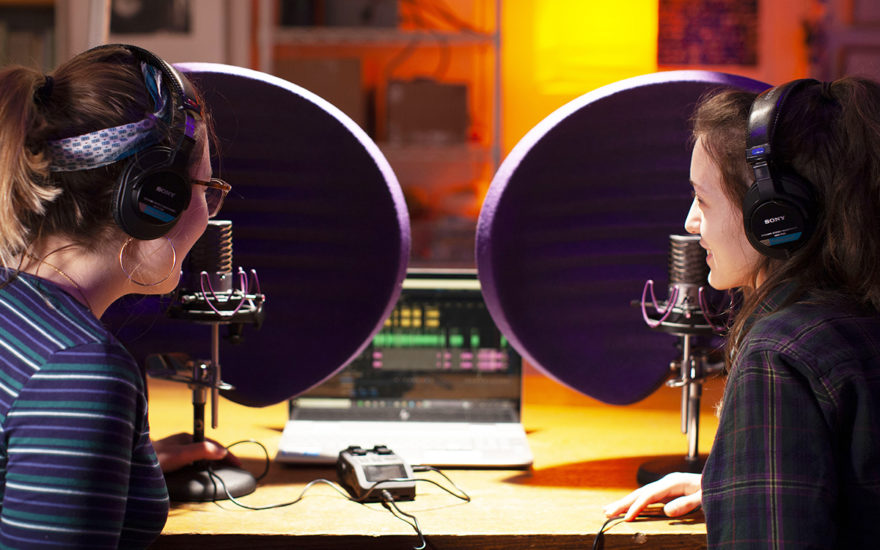
Emma
There's a recurring debate about whether the arts deserve public funding. Some argue that art should survive on market terms alone. What's your view?
David
The market argument fails for the arts for the same reason it fails for public parks or scientific research. The social benefits are real but diffuse — they don't accrue to the person paying for the ticket.
Emma
That's the public goods argument. But critics would say that if people don't value art enough to pay for it, perhaps it isn't as valuable as its advocates claim.
David
That conflates market value with social value. Shakespeare's plays were popular entertainment in their time. Now they're foundational to our cultural heritage. Markets are poor at valuing things that matter over generations.
Emma
There's also an access argument. Without public funding, high-quality arts become the preserve of the wealthy. Cultural participation is a democratic value.
David
Exactly. And the arts have economic benefits that are often underestimated — tourism, creative industries, the quality of life that attracts skilled workers to cities.
Emma
The challenge is making that case to politicians who face immediate budget pressures. The benefits of arts funding are long-term and hard to quantify.
David
Which is why arts advocates need to get better at telling the economic story, not just the cultural one. Both are true, and the economic argument is more persuasive to those who control the purse strings.
Click to listen to the full conversation
2
Film and Cultural Representation
Laura
The conversation about representation in film has shifted dramatically in the last decade. Studios are under real pressure to reflect the diversity of their audiences.
Mark
The pressure has produced some genuine change, but also a lot of performative diversity — token characters who exist to tick a box rather than to tell a meaningful story.
Laura
That's a fair criticism. Authentic representation requires not just diverse faces on screen, but diverse voices behind the camera — writers, directors, producers.
Mark
The data on who gets to make films is still stark. Women direct about a quarter of major studio films. The numbers for directors of colour are even lower.
Laura
The pipeline problem is real. It starts with who gets access to film schools, who gets mentored, who gets their first opportunity. Systemic change requires intervention at every stage.
Mark
There's also an international dimension. Hollywood's global dominance means that American cultural assumptions get exported worldwide. That has real implications for how other cultures see themselves.
Laura
The rise of streaming has actually helped here. Netflix and Amazon have invested in local-language content that reflects non-American perspectives. It's not perfect, but it's a genuine shift.
Mark
The question is whether those investments are driven by genuine commitment to diversity or by the commercial logic of reaching new markets. The motivation matters for sustainability.
Click to listen to the full conversation
3
The Future of Journalism
Rachel
The business model of journalism has collapsed. Classified advertising, which funded local newspapers for a century, moved to the internet. What replaces it?
James
Subscription models are the most promising alternative, but they create a two-tier information environment — quality journalism behind paywalls for those who can afford it, free misinformation for everyone else.
Rachel
That's a genuine concern. Some publishers have experimented with metered paywalls and subsidised access for students and low-income readers, but it's not a complete solution.
James
Public funding is another option, but it raises independence concerns. A journalism outlet that depends on government funding is vulnerable to political pressure.
Rachel
The BBC model — independent public funding through a licence fee — has worked reasonably well for broadcast journalism. Could something similar work for print and digital?
James
The challenge is that the BBC's independence is institutional and cultural, built over decades. Creating that culture from scratch for new publicly-funded outlets would be very difficult.
Rachel
Non-profit journalism is growing — organisations like ProPublica and the Guardian's non-profit arm produce high-quality investigative work. It's not a complete solution, but it's part of the ecosystem.
James
The ecosystem model might be the honest answer. No single funding model will replace what advertising once provided. We need a diverse mix of subscriptions, public funding, philanthropy, and non-profit models.
Click to listen to the full conversation
4
Literature and Social Change
Nina
Literature has historically been one of the most powerful forces for social change. Uncle Tom's Cabin, To Kill a Mockingbird — these books shifted public consciousness in ways that political arguments couldn't.
Alex
The causal claim is hard to establish. Did those books change minds, or did they give expression to changes that were already happening? The relationship between literature and social change is complex.
Nina
The mechanism matters less than the effect. Whether literature leads or reflects social change, it's part of the process. It creates empathy — the ability to inhabit another person's experience.
Alex
Empathy is valuable, but it doesn't automatically translate into action. People can feel deeply for characters in novels while remaining passive in the face of real injustice.
Nina
True. But literature can also provide the language and frameworks for understanding injustice — and that's a prerequisite for action. You can't fight what you can't name.
Alex
The historical examples you cite are powerful. Upton Sinclair's The Jungle led directly to the Pure Food and Drug Act. Silent Spring led to the creation of the Environmental Protection Agency.
Nina
The impact of literature is unpredictable and often delayed. But that unpredictability is also what makes it so interesting — you never know which book will be the one that changes everything.
Alex
I think we agree that literature matters, even if we disagree about the mechanism. The question for writers today is how to reach audiences in a world of infinite competing distractions.
Click to listen to the full conversation
5
Music and Identity
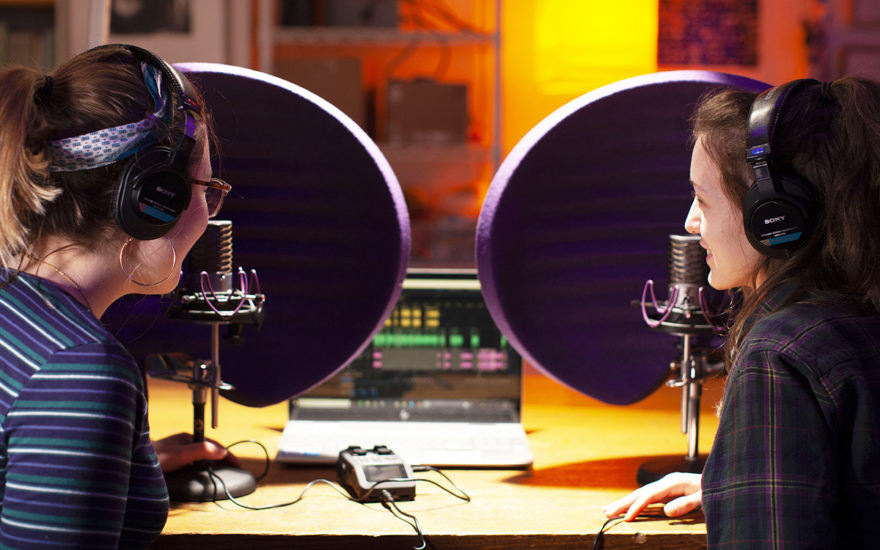
Sophie
Music is one of the most powerful expressions of cultural identity. The way a community's music evolves tells you everything about its history, struggles, and aspirations.
Chris
Absolutely. But globalisation has complicated that relationship. When music from one culture is adopted and commercialised by another, where does authentic expression end and appropriation begin?
Sophie
That's the central tension. Cultural exchange has always enriched music — jazz, rock and roll, reggae are all products of cross-cultural encounter. But the power dynamics matter enormously.
Chris
So it's not about whether exchange happens, but whether it happens on equal terms? When a dominant culture profits from a marginalised culture's music without credit or compensation, that's problematic.
Sophie
Exactly. The history of the music industry is full of examples — Black artists whose music was covered by white artists who received far greater commercial success and recognition.
Chris
And yet some of those same artists have said they were glad their music reached wider audiences, even if the terms were unjust. It's not a simple story.
Sophie
No, it isn't. Which is why the conversation needs to involve the communities whose music is being discussed, not just critics and academics speaking on their behalf.
Chris
That's a principle that applies across the arts. Representation in who gets to tell the story, not just whose story is told.
Click to listen to the full conversation
6
The Digital Transformation of Culture
Kate
Streaming has democratised access to music, film, and television in ways that would have seemed miraculous twenty years ago. That's an unambiguous good.
Ben
Access has improved dramatically, but the economics for creators have deteriorated. Musicians earn fractions of a penny per stream. The platforms capture most of the value.
Kate
That's a real problem, but it's a distribution problem, not an access problem. We can fix the economics without restricting access.
Ben
How? The streaming platforms have enormous market power. Artists and labels have very little leverage in negotiations.
Kate
Regulatory intervention could help — minimum per-stream rates, transparency requirements, or even breaking up the largest platforms. The music industry has been lobbying for these changes.
Ben
There's also a cultural homogenisation risk. Algorithms optimise for engagement, which tends to favour familiar, easily digestible content over challenging or experimental work.
Kate
That's a genuine concern. The long tail of niche content exists online, but it's increasingly hard to discover without algorithmic amplification.
Ben
Which is why we need both better economics for creators and better discovery mechanisms for audiences. Technology created these problems — it can also help solve them.
Click to listen to the full conversation
📝 Unit Quiz
Test your understanding of the conversations in this unit.
Part A — Fill in the Blank
The arts have economic benefits including ________, creative industries, and quality of life.
Women direct about a ________ of major studio films.
Classified advertising, which funded local newspapers, moved to the ________.
Upton Sinclair's The Jungle led directly to the Pure Food and ________ Act.
Part B — Multiple Choice
What does David argue about markets and the arts?
What does James suggest as the honest answer to the journalism funding crisis?
What does Sophie argue about cultural appropriation in music?
Part C — Matching
Public goods argument
Performative diversity
Metered paywall
Cultural homogenisation
Step-up in basis